In today’s world, security is more important than ever. And it’s not just about keeping the bad guys out; it’s about making sure everyone feels safe and secure while going about their daily lives. This is where scanning technology comes into play, transforming how we think about and implement security measures across various industries. From airports to cargo shipping, Instech Netherlands advancements in scanning technology are making a big difference.
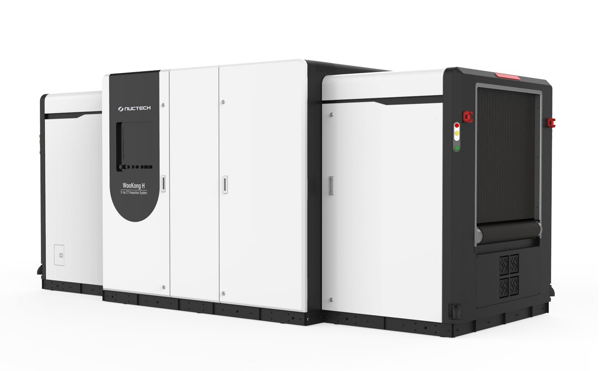
One of the most significant shifts has been the move towards using advanced X-ray scanners, which provide detailed images of baggage and cargo. These images allow security personnel to quickly and accurately identify potential threats without having to manually inspect each item. It’s like having an extra set of eyes that never get tired or miss a detail. This technology has not only improved security but also made the process more efficient and less intrusive for everyone involved.
Faster checkpoints for a smoother experience
Let’s face it, no one likes waiting in long lines at airport security. It’s one of those necessary evils that everyone just puts up with. But what if it didn’t have to be that way? Modern scanning technology is making it possible to speed up the entire process, cutting down on wait times and making checkpoints more efficient. Imagine breezing through security without the usual hassle—sounds like a dream, right?
By using state-of-the-art X-ray scanners, airports can screen more passengers in less time. These machines are capable of scanning multiple items simultaneously, reducing bottlenecks and keeping things moving smoothly. For more information on how these scanners work, check out x ray scanner baggage solutions. It’s a win-win situation: passengers spend less time waiting, and security staff can focus on more critical tasks instead of dealing with frustrated travelers.
This increase in efficiency doesn’t come at the expense of safety. In fact, the opposite is true. Faster checkpoints mean that security personnel can spend more time analyzing potential threats and less time dealing with mundane tasks. The result is a more secure environment for everyone.
See also: How Cloud Faxing Technology Ensures Secure Document Delivery?
Cutting down wait times
Waiting in line is a universal annoyance, whether it’s at the grocery store or the airport. But when it comes to security checkpoints, cutting down on wait times isn’t just about convenience—it’s also about safety. Longer lines mean more people in one place, which can be a security risk in itself. By streamlining the process with advanced scanning technology, we can reduce these wait times and make the entire experience safer for everyone.
Advanced scanners can quickly identify items that need further inspection, allowing security personnel to focus their attention where it’s needed most. This targeted approach means that fewer items need to be manually inspected, which speeds up the entire process. Plus, with fewer false alarms, passengers can move through checkpoints more quickly and with less stress.
Increasing throughput without sacrificing safety
One of the biggest challenges in security is finding the right balance between efficiency and safety. It’s no good speeding up the process if it means compromising on security. Fortunately, modern scanning technology makes it possible to increase throughput without sacrificing safety.
These advanced scanners use sophisticated algorithms to analyze images in real-time, identifying potential threats quickly and accurately. This means that even as more people pass through checkpoints, the level of security remains high. It’s like having a super-efficient security team working around the clock to keep everyone safe.
By increasing throughput without sacrificing safety, these scanners are helping to create a more secure environment for everyone. Whether it’s at an airport, a cargo terminal, or a major event, this technology is making a real difference.
Enhanced detection means better protection
At the end of the day, the primary goal of any security measure is to protect people and property from harm. And when it comes to detection capabilities, modern scanning technology is leaps and bounds ahead of older methods. These advanced scanners can detect a wide range of threats, from explosives and narcotics to radiation and biological agents.
The key to this enhanced detection capability lies in the use of dual-energy X-ray technology and advanced algorithms. These tools allow scanners to differentiate between different types of materials, making it easier to identify potential threats. For example, an advanced scanner can tell the difference between a harmless bottle of water and a dangerous liquid explosive.
This level of precision means that security personnel can focus their efforts on genuine threats rather than wasting time on false alarms. It’s a more effective approach that leads to better protection for everyone involved.
The role of ai in modern scanning solutions
If there’s one thing that’s revolutionizing almost every industry right now, it’s artificial intelligence (AI). And the world of security scanning is no exception. AI-powered systems are taking scanning technology to new heights by improving accuracy and reducing false alarms.
These AI systems use deep learning algorithms to analyze images from X-ray scanners in real-time. They can identify patterns and anomalies that might be missed by human eyes or traditional software. This means that potential threats can be detected more quickly and accurately than ever before.
Moreover, AI systems are continually learning and improving over time. As they analyze more data, they become better at identifying potential threats and reducing false positives. It’s like having a highly trained security expert on hand 24/7, constantly improving their skills and knowledge.
Looking ahead: what’s next for security technology
The future of security technology is incredibly exciting, with new advancements being made all the time. From AI-powered scanners to biometric identification systems, the possibilities are endless. These technologies are not only making our world safer but also more efficient and convenient.
One area that’s seeing significant growth is the use of biometric identification systems. These systems use unique physical characteristics, such as fingerprints or facial features, to verify identities quickly and accurately. Combined with advanced scanning technology, biometric systems can provide an additional layer of security that’s both effective and user-friendly.
Another exciting development is the integration of IoT (Internet of Things) devices into security systems. These connected devices can communicate with each other in real-time, providing a comprehensive view of potential threats. For example, an IoT-enabled scanner could alert nearby cameras or sensors if it detects something suspicious, allowing for a coordinated response.
The future looks bright for security technology, with ongoing advancements promising even greater levels of protection and efficiency. As these technologies continue to evolve, they will undoubtedly play a crucial role in keeping our world safe.