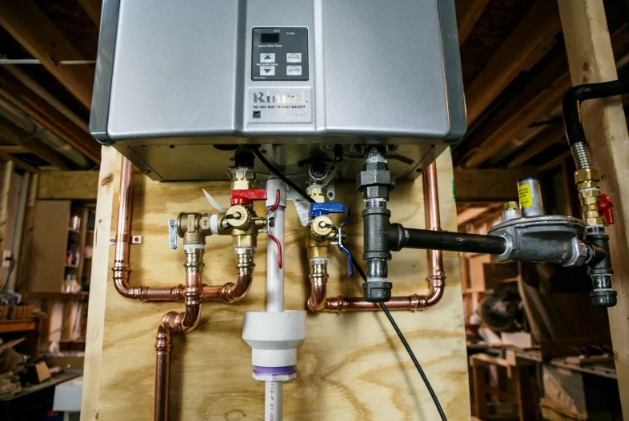
A tankless water heater conversion may involve more than removing an old storage tank and connecting a new unit. Gas tankless water heaters need to deliver a large amount of heat quickly, which can mean higher gas demand while the system is running. Depending on your home’s existing gas piping, a gas line upgrade for your tankless water heater may be needed.
That’s not always the case, though. In many situations, you can avoid it. We’ll explain.
Tankless Water Heaters Can Need More Gas at Once
A traditional gas storage water heater heats a tank of water and keeps that supply ready for use. Because it can heat the water over time, its burner does not necessarily need to produce the same instantaneous heating output as a tankless system.
When you turn on the hot water with a tankless system, however, it has to heat incoming water as it passes through the unit. Depending on flow rate and the temperature increase required, the burner may need substantial input while hot water is being used.
See also: A Buyer’s Guide To Choosing A Fountain Pump 4 Ft Lift
How a Gas Line Is Sized
Determining whether you need a gas line upgrade for tankless water heater installation takes some measurements, as gas piping must be sized around the demands of the entire system. Factors include the BTU requirements of connected appliances, available gas pressure, pipe material, pipe diameter, and the length of the piping run.
The International Fuel Gas Code provides gas-piping sizing methods and capacity tables used to determine whether piping can deliver sufficient fuel to appliances under operating conditions. You’ll want an experienced water heater installer to calculate the actual load to get the right fit.
What Happens During a Gas-System Evaluation?
Before converting, the existing gas system should be evaluated against the requirements of the proposed tankless unit.
Check the Tankless Unit’s Demand
The process starts with the manufacturer’s rated gas input. Tankless models vary considerably in capacity, so the gas requirement needs to match the specific equipment being installed.
Calculate Other Gas Loads
The water heater is rarely the only gas appliance in a Scottsdale home. A furnace, range, clothes dryer, fireplace, pool heater, or outdoor appliance may draw from the same gas system. The total connected load matters because the piping and supply must support appliances when they are operating.
Evaluate the Existing Piping
Next comes the gas-line layout itself. Pipe diameter, material, length, configuration, and available pressure all affect capacity.
This is especially important in an established community such as McDowell Mountain Ranch. And, neighboring homes with similar floor plans may have different gas requirements because of remodels, pool equipment, outdoor kitchens, or appliances added over the years.
Determine What Needs to Change
If existing capacity is adequate, major changes may not be necessary. In other situations, part of the piping may need to be resized or rerouted to accommodate the new water heater.
One common misconception is that switching to tankless always requires running a larger gas pipe all the way from the meter. The actual solution depends on the existing system and the new appliance’s requirements.
Sometimes the current piping already has sufficient capacity. In other homes, only a branch serving the water heater may need modification. More extensive changes may be necessary when existing piping is undersized for the combined appliance load.
Venting and Electrical Requirements
Tankless models may also have venting requirements that differ substantially from those of the storage heater being replaced. Depending on the equipment, new vent materials or a different venting route may be required.
Scottsdale Permits and Codes Apply
The City of Scottsdale requires plumbing permits for hot water installation. For many single-family residential plumbing projects, Scottsdale uses its minimum-permit process rather than requiring a full plan review, meaning permits are easy to get and inexpensive.
When Might a Gas Line Upgrade Be Needed?
A gas line upgrade for tankless water heater installation becomes more likely when the proposed unit has significantly greater input requirements than the old storage heater, the piping run is long, or the same gas system already serves several high-demand appliances.
Insufficient pressure at the appliance or existing piping that cannot support the calculated load can also require changes. Ultimately, every tankless water heater conversion is a little different. Evaluating the home’s actual gas demand and infrastructure before installation helps determine what upgrades are necessary and avoids making unnecessary changes based on assumptions.
Get in touch with the experienced tankless water heater experts at George Brazil Plumbing & Electrical today. We can evaluate your Scottsdale home’s existing gas system and determine what is required for a safe, properly planned tankless water heater conversion.
