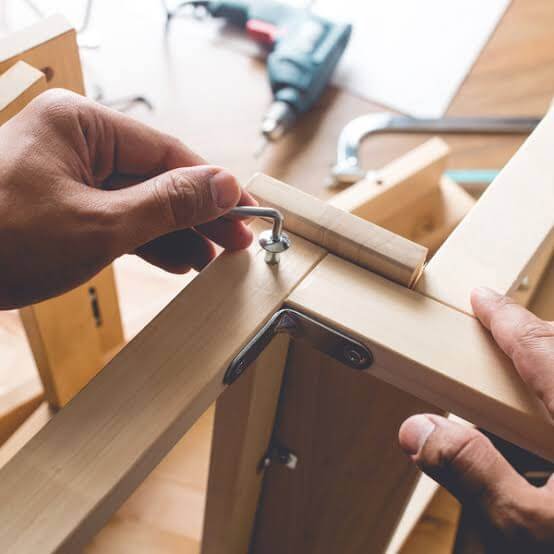
Large furniture is one of the biggest challenges in any move. Beds, wardrobes, dining tables and sectional sofas rarely fit through doorways, stairwells and lifts in one piece. Taking them apart makes them easier to carry, reduces the risk of damage and saves space in the moving vehicle. But disassembly done carelessly leads to lost screws, stripped holes and wobbly furniture in the new home. This guide explains how to disassemble, pack and reassemble furniture the way professional movers do.
Which Furniture Should Be Disassembled?
Not everything needs to be taken apart. As a rule, disassemble furniture if:
- It does not fit through doors, stairwells or lifts at either address
- It has fragile parts such as glass shelves, mirrors or doors
- It is very heavy or awkward to carry in one piece
- It has legs or protruding parts that could break
- Disassembly significantly reduces the space it takes in the vehicle
Typical examples include bed frames, large wardrobes, bookcases, dining tables, desks, bunk beds and sectional sofas.
Prepare Before You Start
Gather the Right Tools
A basic toolkit usually covers most furniture: screwdrivers of different sizes, Allen keys, an adjustable spanner, a rubber mallet and a battery drill with bits. Having the right tool prevents damaged screw heads.
Find the Instructions
If you still have the assembly instructions, keep them handy. Many manufacturers also publish instructions online. Reversing the assembly steps is the simplest way to take furniture apart.
Take Photos
Photograph the furniture from several angles before you start, and take photos at each stage of disassembly. These pictures are invaluable when reassembling, especially for complex pieces.
Empty the Furniture
Remove everything from drawers, shelves and wardrobes before disassembly.
Step-by-Step Disassembly
- Remove fragile parts first: glass shelves, mirrors and glass doors should be removed and packed separately with corner protection.
- Remove drawers and doors: label doors with their position (left, right, top) using masking tape.
- Detach legs and handles: these are easily broken during transport.
- Take apart the main structure: work slowly and support panels so they do not fall.
- Keep hardware organised: put screws, bolts and small parts in labelled zip-lock bags.
Organise Hardware Properly
Lost screws are the most common problem when reassembling furniture. Avoid it by:
- Using one bag per piece of furniture, labelled with its name
- Taping the bag securely to the largest part of the furniture, or keeping all bags in one clearly marked box
- Keeping Allen keys and special tools in the same bag
Protect the Parts
Wrap panels in moving blankets or cardboard to prevent scratches. Bundle long parts, such as bed rails, together with stretch film. Protect corners with cardboard corner guards. Never place heavy items on top of flat-pack panels, as they can bend or crack.
See also: Business Closure Procedures Every Organization Should Understand
Flat-Pack Furniture: Handle With Care
Particleboard furniture is not designed to be assembled many times. Each time screws are removed and reinserted, the holes weaken. Tighten screws carefully without overtightening, and consider using slightly larger screws or wood glue in worn holes if necessary. For very old or worn flat-pack furniture, it may be more practical to replace it than to move it.
Reassembly in the New Home
- Place each piece of furniture in the correct room before reassembling it.
- Follow your photos and instructions in reverse order.
- Tighten all screws once the structure is complete, then check it is level and stable.
- Anchor tall furniture, such as bookcases and wardrobes, to the wall to prevent tipping.
Securing tall furniture is especially important in homes with children. Furniture tip-over accidents are a known safety risk, as highlighted by the US Consumer Product Safety Commission’s anchoring campaign. Product safety in Finland is supervised by the Finnish Safety and Chemicals Agency Tukes.
When to Leave It to Professionals
Disassembling and reassembling furniture takes time and patience, and some pieces, such as built-in wardrobes, large beds with lifting mechanisms or heavy solid-wood furniture, require experience. Professional movers bring the tools, know the techniques and are insured if something goes wrong. Many moving companies include disassembly and assembly in their service. In the Espoo area, you can book this as part of a full move at https://kuljetusvarma.fi/muuttopalvelu/espoo/.
Frequently Asked Questions
Should I disassemble an IKEA-style wardrobe?
Usually yes. Large flat-pack wardrobes are too tall and fragile to move assembled.
Can a sofa be disassembled?
Many sofas have removable legs and some sectional sofas separate into modules. Check the manufacturer’s instructions.
Conclusion
Careful furniture disassembly makes your move safer, faster and more efficient. Photograph each step, organise hardware in labelled bags, protect parts during transport and anchor tall furniture after reassembly. Whether you do it yourself or let professionals handle it, a little planning ensures your furniture arrives in perfect condition.