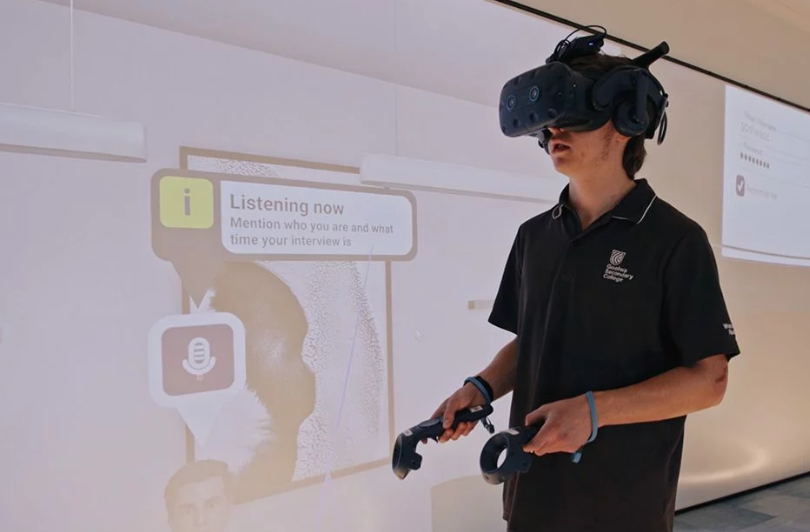
The integration of Virtual Reality (VR) in education presents a transformative shift in pedagogical approaches. By offering immersive experiences, VR enhances student engagement and retention. It facilitates personalized learning paths and allows for virtual field trips, enriching cultural understanding. Moreover, VR aids in professional training by simulating real-world scenarios. However, the implications of these advancements on traditional educational frameworks remain to be explored. What challenges and opportunities lie ahead for educators and students alike?
Enhancing Engagement Through Immersive Learning Experiences
As virtual reality (VR) technology continues to evolve, educators are increasingly recognizing its potential to enhance student engagement through immersive learning experiences.
Interactive simulations transport learners into dynamic environments, fostering deeper understanding and retention.
Moreover, gamified assessments transform evaluation into an engaging challenge, motivating students to explore concepts actively.
This innovative approach empowers learners, creating a vibrant educational landscape that champions exploration and creativity.
Personalized Learning and Adaptable Environments
An increasing number of educators are harnessing virtual reality (VR) technology to create personalized learning experiences that adapt to individual student needs.
This innovative approach employs adaptive assessments and delivers customized feedback, enabling learners to engage with content at their own pace.
Virtual Field Trips and Real-World Applications
Building on the foundations of personalized learning, virtual reality (VR) also expands the horizons of education through immersive virtual field trips and real-world applications.
These experiences enable students to engage in virtual exploration, offering cultural immersion that transcends geographical boundaries.
Training and Skill Development in Professional Education
Transforming the landscape of professional education, virtual reality (VR) offers innovative training and skill development opportunities that simulate real-world scenarios.
Through immersive virtual simulations, learners can engage in realistic environments, enhancing their skill acquisition and practical knowledge.
This approach not only fosters independence and critical thinking but also equips professionals with the tools necessary to navigate complex challenges in their respective fields.
Conclusion
In conclusion, while some may argue that VR in education can lead to a detachment from real-world interactions, it is essential to recognize that these immersive experiences can actually enhance social learning and collaboration. By fostering environments where students engage with both virtual content and their peers, VR not only enriches individual understanding but also cultivates essential interpersonal skills. Embracing this technology can transform educational paradigms, ultimately preparing learners for the complexities of a rapidly evolving world.